10 January 2009

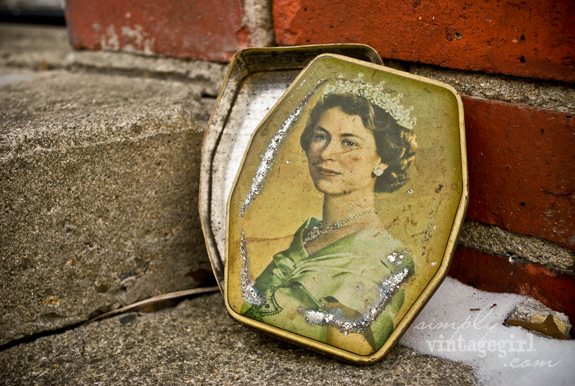
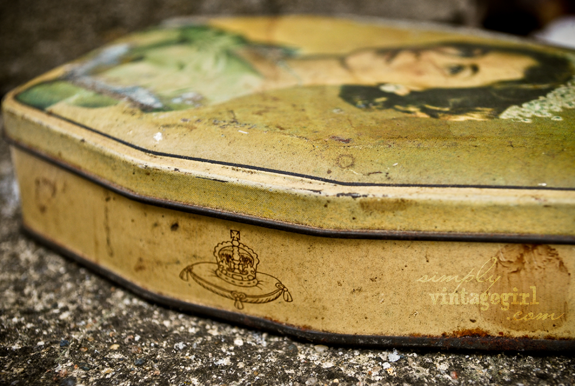
A while back, I found this special tin at a small antique shop. The tin is quite worn, adding to the vintage beauty of the design.

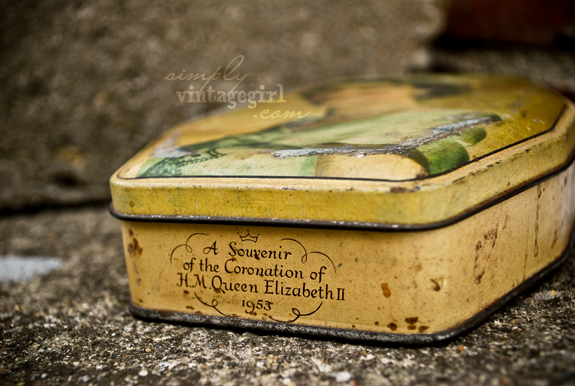
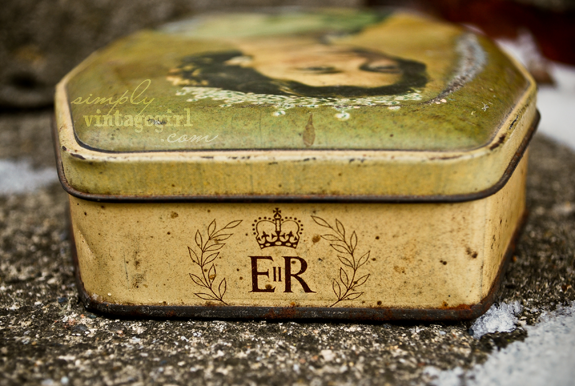
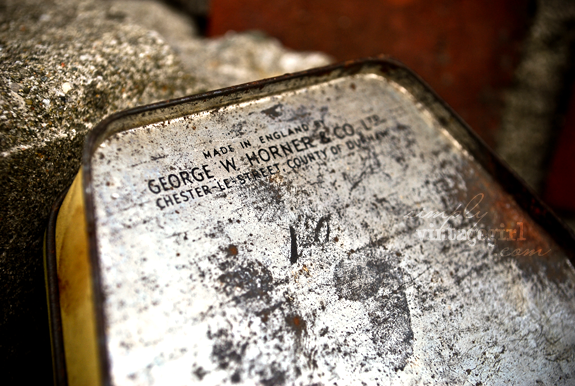
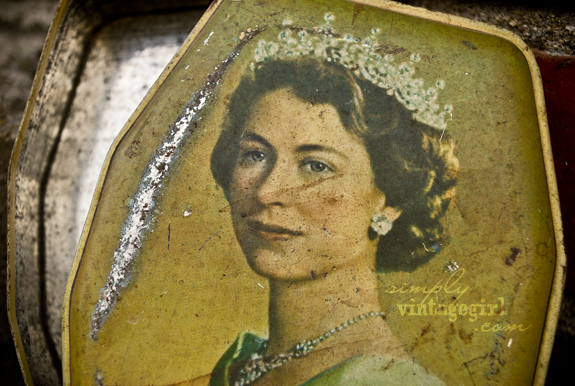
On the lid of this little treasure is a portrait of Her Majesty Queen Elizabeth II. The tin is a souvenir of the coronation of Queen Elizabeth II on June 2, 1953. It was Made in England by George W. Horner & Co. Ltd. on Chester-Le-Street, County of Durham.

I think it is a wonderful find — isn’t it lovely? I wonder if anything came inside of it? Do any of my English visitors know?


19 December 2008

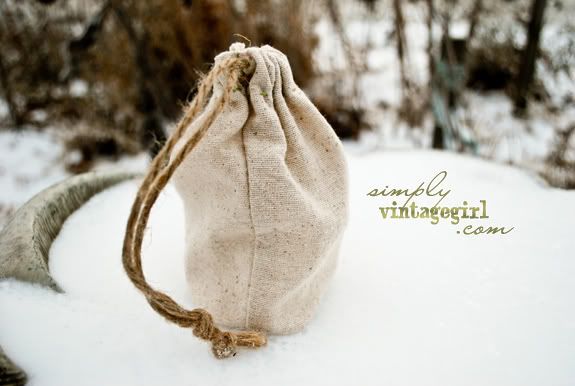
This little pouch I created is simple to make and easy to fill. It is the perfect size to hold little treasures found on adventures, such as pebbles, fossils, pine cones, berries, leaves, buried treasure, or any other little thing found while exploring. It is also the perfect place to store goodies (candies, cars, doll clothes, ribbons, toys, sewing supplies, etc.).

Supplies:

Burlap or Course Muslin – material for pouch (I cut a folded piece of muslin, with the cut dimensions 6.5 inches wide, and 7.5 inches tall)
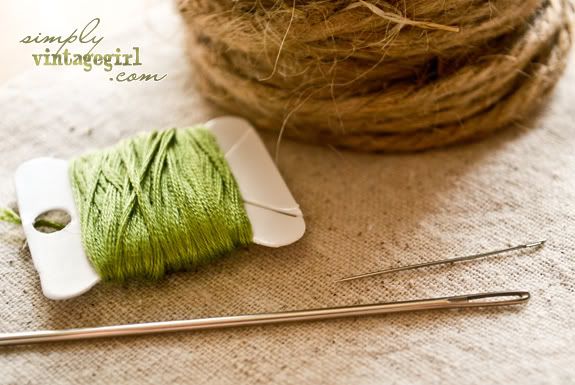
Needles – small for sewing, large (very large) for pulling twine through material
Twine – for draw-string (I used two that where each about 20 inches long)
Thread – embroidery floss will work well (I used 3-ply)

Directions:

1. Fold about an inch of the top edge inward. Knot and sew (with the straight stitch) across, making a nice hem. This will be seen from the outside when the pouch is finished, so make the stitches the way you would like them to look.
2. Sew the straight stitch about a quarter of an inch from the raw edge. Knot and and cut thread.
3. Hem both ends in this way, making sure to fold them down on the same side of the material – what will be the inside of the pouch.
4. Fold them together, front pieces facing together. Sew about 3/8-inch from the edge all the way down to the bottom.
5. When you come to the bottom where the material is folded, knot securely.
6. This type of finish will make the bottom corners of bag to appear like this when folded right-side-out.

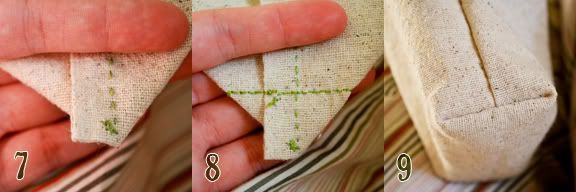
7. For different corners that give more room at the bottom of the pouch, here is a variation. Sew just like before, but add another step. Flatten the inside corner of the pouch to make a triangle, and fold the seam to one side.
8. Sew straight across triangle about 3/4-inch from the tip.
9. When turned right-side-out, the corner should look something like this.
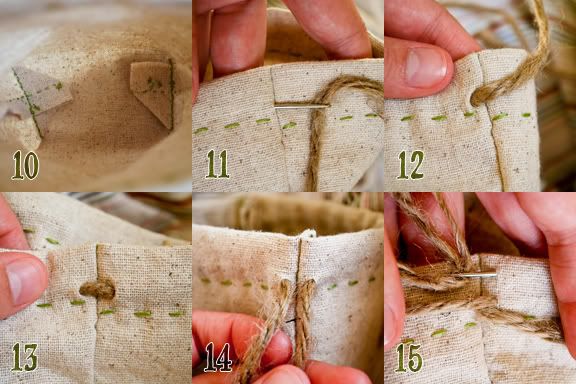
10. The inside of the pouch should look like this.

11. Turn pouch right-side-out. For the draw-string, take a very large needle and thread the twine through it. Poke needle through the first layer of the material at the top of pouch, but not through the second piece. Poke the needle back out through the other side at the edge. Now, this is a little stressful, but if you have strong material it should be alright. Pull the needle through the first hole that was made, dragging the twine through the hole with it. Pull the needle through the second hole on the other side as well.
12. It should look something like this.
13. Do the same on the other side of the hem to where you have something that looks like this on one side,
14. and two pieces of twine on the other.
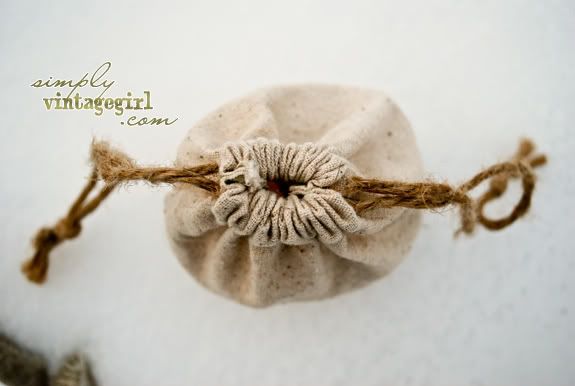
15. Do this again, just on the other side. When you are finished, each side should have a small line, and a set of twine ends.
16. To keep the twine in good condition and from sliding through the casing, tie knots in the ends of both sets.

If this pouch is for a little lady, you can embroider any type of decoration you would like (e.g. flowers, verses, etc.) for extra beauty.

I keep my sewing supplies – needles, thread, etc – inside of my pouch, and have found it quite handy. I hope you enjoy yours!


13 December 2008

My Auntie Lou posted a picture of this sunset from her home. I thought I would post a couple photos of the same sunset, just from our home.

This is through the window of our backdoor. I really liked the wet glass effect.

This is a combination of five different photographs to get the above wide angle shot. I also did one of the complete sunset, but I think I’ll just let you imagine what the other side looked like!

The heavens declare His righteousness,
And all the peoples have seen His glory.
” – Psalm 97:6


11 December 2008

A Homemade Christmas at SimplyVintagegirl.com

Welcome to the eighth A Homemade Christmas! This is week Eight of Ten (you don’t have to enter in each one). I hope you’ll join us in sharing about homemade gifts that you have received or made — past, present, and future!
You can click here for the Introductory post.

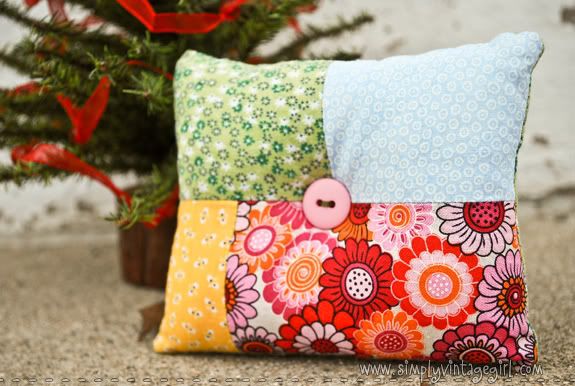
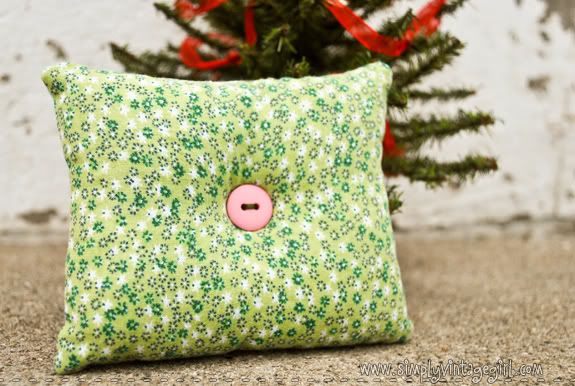
Pincushions are practical and the perfect place to store any stray pins.

This pillow pincushion is simple, yet quite lighthearted and cheery. This is the front, with a patchwork of four colorful fabrics.

The back of the cushion with a pink button for extra beauty.

The finished size of the cushion is 4.25″ x 3.75″. A pretty pincushion would be such a nice treat for anyone!

Have you made or received any homemade gifts? If you’d like to make a post about your homemade gifts, you can sign Mr. Linky below. You can add one of my Homemade Christmas icons to your blog by clicking here. Each Thursday (until the end of December) there will be A Homemade Christmas post! Hope you’ll join in the fun as we learn, inspire, and encourage one another!

A Homemade Christmas Participants

1. BreezyTulip
2. Sarah Mae (Letter to husband/future husband)
3. Trisch (Knitting Needle Case)
4. Frugal Carol – Home Made Gift Tags….
5. Buttercup
6. Keilah
7. Jennifer on the Front Porch (Handmade Gifts for kids)
8. Amy
9. Bonnie
10. SchoolinR’home
11. Becca
12. Auntie Lou-Pantaloons for Christmas
13. Tammy
14. All Occasions
15. Nai Nai


2 December 2008

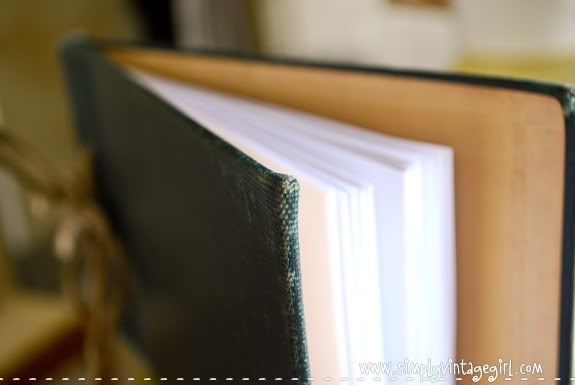
An autograph book is a sweet place to store and collect autographs. From family to friends, and even the famous. You can use it as a guest book for the visitors in your home, at graduation parties, etc. It is nice to go back and read through it to see what notes others left. What a great way to remember the special events in your life!

Supplies:

Cover of an Old Book, preferably blank
Razor Blade
Boning Tool
Eyelet Punch
Hammer
Paper Cutter or Scissors
Hole Punch
Twine

Directions:

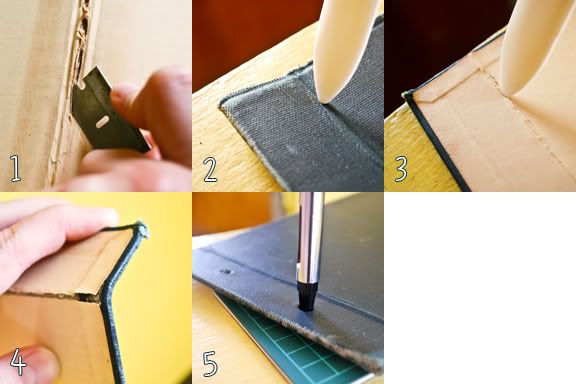
1. Cut the cover of the old book from the binding. I found that a razor blade works best, but please take all caution when using one.
2. Use boning tool to put crease in book cover. Mine is about 1.25″ from the edge.
3. Repeat step 2 on other side.
4. Bend the cover backwards where the creases were made.
5. To punch holes in cover, use an eyelet punch and hammer to go all the way through. Make sure to have a protected surface underneath (I used a self-healing mat).

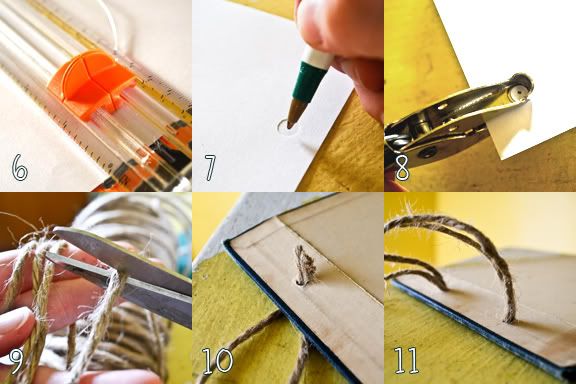
6. Cut paper to the desired size that will fit inside book cover. I cut 8.5″x11″ sheets in half, making 5.5″x8.5″ sheets.
7. You can make a template out of paper by punching holes in the correct place, then align the template on top of the cut-out paper, and make a mark in the center.
8. Punch a hole with the dot in the center. In this way each page should line up just right.
9. Cut a piece of twine that will be long enough to go around both holes, with extra length to tie a bow. I doubled my twine because with only one it was too loose and the holes were too large.
10. Poke the twine through the hole from the outside on the back cover. Pull about half the length through.
11. Take the other end and poke through the other hole, and pull the rest of the way through until each side is about the same length.

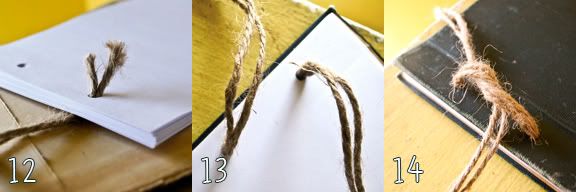
12. Poke each side through the stack of cut and punched paper.
13. Pull through until each side is even. Add front cover and pull through.
14. Knot securely and add a bow for prettiness.

A few ideas for extra beauty: Old photos, lace, ribbon, buttons, etc. I have not added any decoration to mine yet, though I do plan on doing so.

I now wish I had made one long ago because I have acquired several autographs, but they are all in different places. I hope you enjoy making your own autograph book!


30 October 2008

A Homemade Christmas at SimplyVintagegirl.com

Welcome to the second A Homemade Christmas! This is week Two of Ten (you don’t have to enter in each one). I hope you’ll join us in sharing about homemade gifts that you have received or made — past, present, and future!
You can click here for the Introductory post.


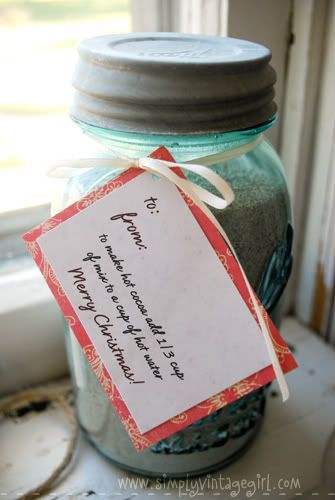
Who could resist a nice warm mug of Hot Cocoa? I know I couldn’t. This is an eagerly welcomed gift, and one that just might end up asking for a refill. A Ball jar, with an added label gives this easily made gift extra charm.

On a cold winter’s night a mug of hot chocolate is the perfect touch for a cozy evening. Here is a delicious recipe for a nice jar of homemade cocoa mix.

.

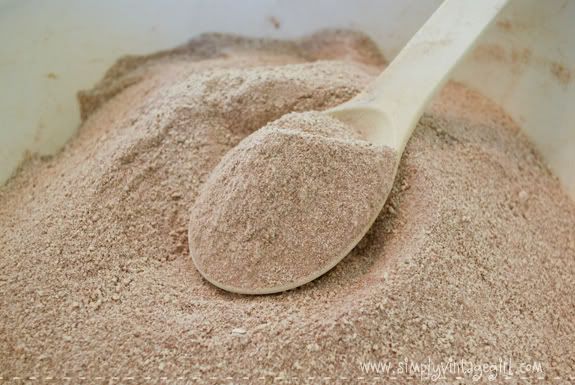
Hot Cocoa Mix

YIELD: almost 4 quarts

8 qt. box powdered milk
8 oz. coffee creamer
2 cups powdered sugar
1 lb. box Nestles Quick

Mix and store. Use 1/3 cup mix to 1 cup hot water.

As an extra treat for my darling readers, I have created labels for you to use on your jars of hot cocoa! You can click here for information on downloading the file.

Have you made or received any homemade gifts? If you’d like to make a post about your homemade gifts, you can sign Mr. Linky below. You can add one of my Homemade Christmas icons to your blog by clicking here. Each Thursday (until the end of December) there will be A Homemade Christmas post! Hope you’ll join in the fun as we learn, inspire, and encourage one another!

A Homemade Christmas Participants

1. Tina
2. Robin @ Robin’s Egg Blue
3. BreezyTulip
4. Emily
5. Missie
6. SchoolinRHome
7. Meg


23 October 2008

A Homemade Christmas at SimplyVintagegirl.com

Welcome to the first A Homemade Christmas! This is week One of Ten (you don’t have to enter in each one). I hope you’ll join us in sharing about homemade gifts that you have received or made — past, present, and future!
You can click here for the Introductory post.

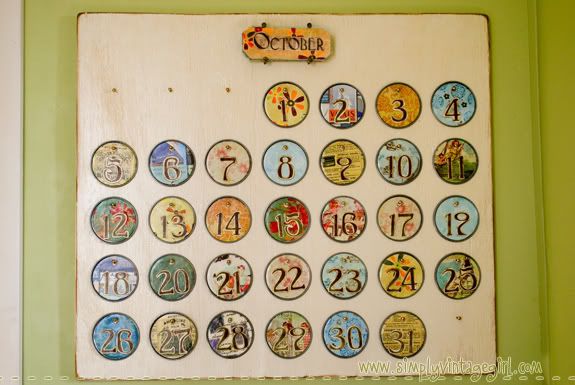
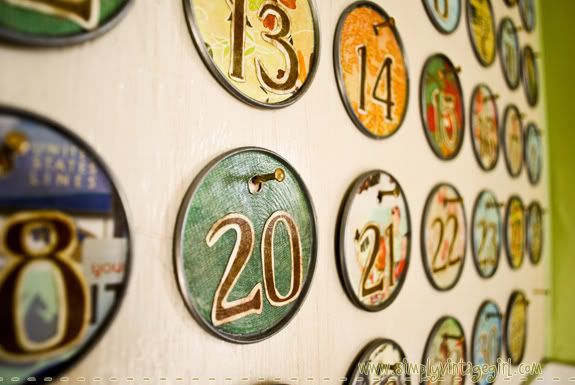
This calendar will last a very long time, which makes it a great gift. Since it is perpetual, it just keeps going. There are lots of things you can do with the idea, and it’s pretty easy to make.

It has a bit of a vintage look to it. Each date is the tin lid of a fruit concentrate can. I used scrapbooking paper for the background of each date. The numbers I printed out on card stock and then cut out with an exacto knife. The background is a wood board that was primed, spray painted, then distressed (sanded and stained).

Each date is put together with decoupage glue (we use Mod Podge) with the scrapbook paper in the background, and the numbers stuck down on top of that.

To make the holes, I took a piece of vellum and cut it out the same size and the background paper. I used vellum so that I could see where to put the hole. Near the edge (about 1/4 inch from the edge), I punched a hole in the vellum. This was used as the hole template.

I laid the vellum template on top of each finished date, and marked (with a permanent) the spot where the hole was to be. In this way all of the holes were located in the same place on each one.

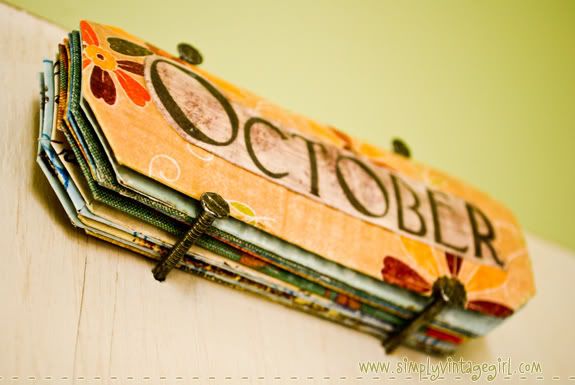
My wonderful daddy put holes in the tin lids, and cut out the months.

The months are actually cut-outs from the sides of large tin cans (you can slightly see the ripples in the middle). After Daddy cut the tin out, I decoupaged them with scrapbook paper. Four large nails were added to the top to hold the months.

An addition for the calendar (which I haven’t made yet) would be making dates for holidays, birthdays, and anniversaries.

It does take quite a while to make, so if you’re thinking about making one, you better get to work saving all those juice can lids!

Have you made or received any homemade gifts? If you’d like to make a post about your homemade gifts, you can sign Mr. Linky below. You can add one of my Homemade Christmas icons to your blog by clicking here. Each Thursday (until the end of December) there will be A Homemade Christmas post! Hope you’ll join in the fun as we learn, inspire, and encourage one another!

A Homemade Christmas Participants
 

1. BreezyTulip
2. Robin@ Robin’s Egg Blue
3. Emily
4. SchoolinRHome
5. Tina
6. lilie
7. Jess @ the JOB
8. Buttercup


8 September 2008

Here is a project I thoroughly enjoyed. With a combination of several different items that are easy to come by, you can come up with a wonderfully attractive little notebook to flip through.

Supplies:
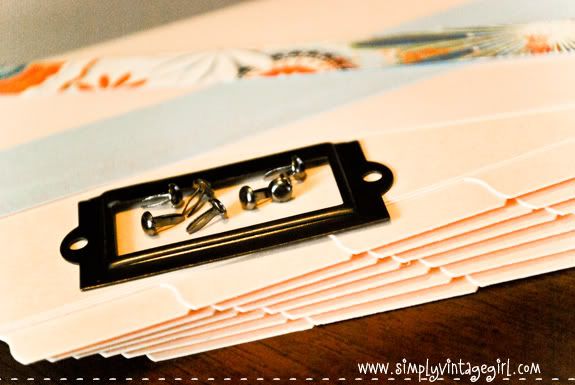
Tabbed Index Cards – used ten 4″x6″ sized cards
Scrapbook Paper – for extra beauty
Two Metal Rings – to bind notebook together
Tape – double-stick tape or adhesive squares
Pen – for writing section name on tabs
Memo Book – one of the dirt cheap ones (same size as index cards – 4″x6″)
Brads (optional) – for tacking down small frame
Metal Frame (optional) – found in scrapbooking department, preferably a small size

Directions:
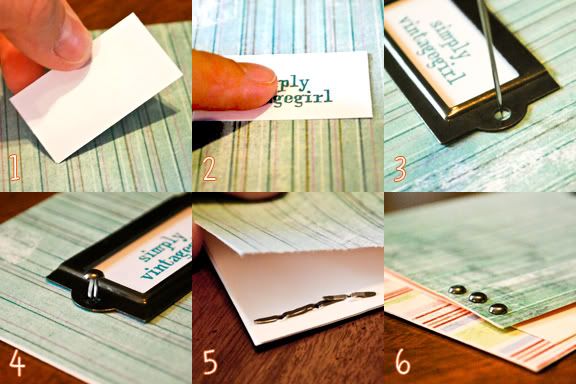
1. Cut out scrapbook paper to fit the front of index card. Take cut-out (to fit metal frame, if desired) printed notebook label and stick to the front with adhesive.
2. Press to make sure it stays.
3. Place metal frame on top of label, and poke holes with a needle or other sharp object (please be very careful).
4. Stick brads through holes to secure frame.
5. Fold back the ends of the brads to make sure they stay put.
6. I added three extra brads to the bottom of the cover of my notebook.

7. For each divider index card, you can leave some blank without any decoration,
8. or you can go ahead and stick scrapbook paper down on each one, and even front and back if you wish.
9. Each of the pages and index cards will need to have holes punched in them so that they can be bound with metal rings. Since all three of us ladies (Mom, Bre and I) were making one, it made it easier to make a template and use it on each of the pages that needed punched. The template was a piece of card stock paper cut out the size of the index cards. Then holes were punched 1.5″ from the edge on both top and bottom (making two holes). In this way, all we had to do was lay the template on the paper, and with a pen or pencil draw a dot in the center of the hole that had been punched out of the template.
10. Take paper with mark from template, and center the dot in the hole punch. Punch hole.
11. Continue to do this with each page, and when you are finished they should all line up just right, with the holes in the exact same place on each page.
12. Unhook metal rings and poke through holes.
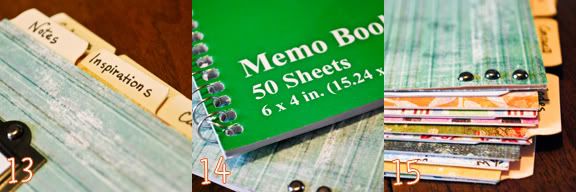
13. Label each section on the tab that sticks out from cards.
14. Rip the paper out of the memo book, and cut of the ripply, bumpy edge. Use the hole punch template to punch holes through lined paper in the right spots.
15. Unhook the metal ring and add the lined paper. This will give thickness and room to write in the notebook.
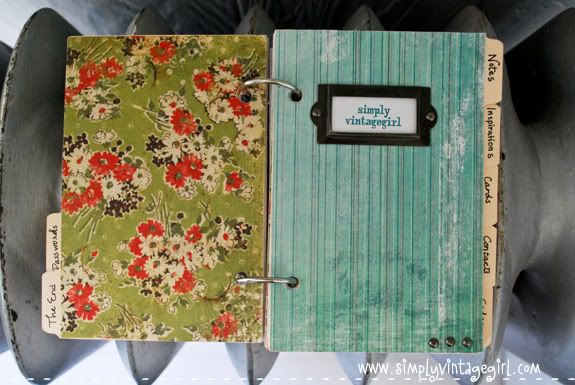
This is of the back and front covers of my little notebook. The tab on the back cover says, The End.
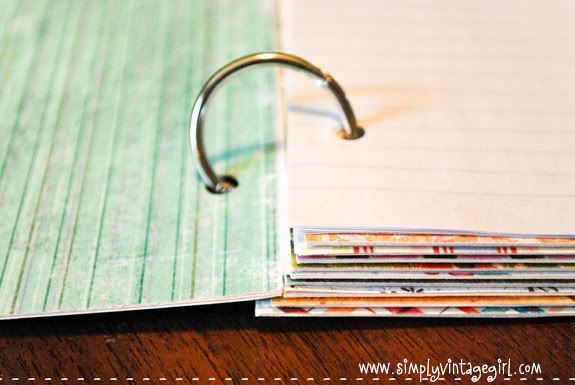
On the covers, I scrapbooked on both the front and the back side of the index card. In each section there are seven sheets of memo paper.
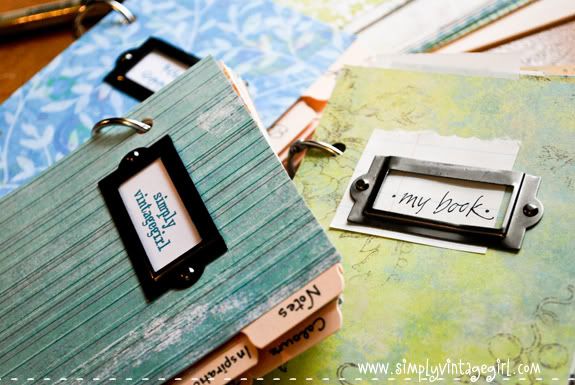
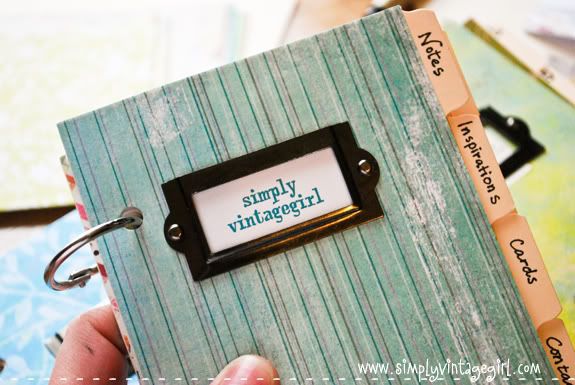
Momma’s is farthest away – Robin’s Egg Blue. Breezy’s is titled – My Book. And as you’ve probably noticed, mine is – simply vintagegirl.

Both Momma’s and Breezy’s tabs are alphabetically labeled, as in A, B, C, D, etc.
The tabs of my notebook are entitled: Notes, Inspirations, Cards, Contacts, Codes, Colours, Blogs, Photographs, Passwords, and The End. I am planning on adding a few more before “The End”, which will say: Scripture, Quotes, Recipes, Important Dates, and Post Ideas.

Hope you enjoy making your own little notebook!